3D Protea Tumbler Wrap: Digital Sublimation Design
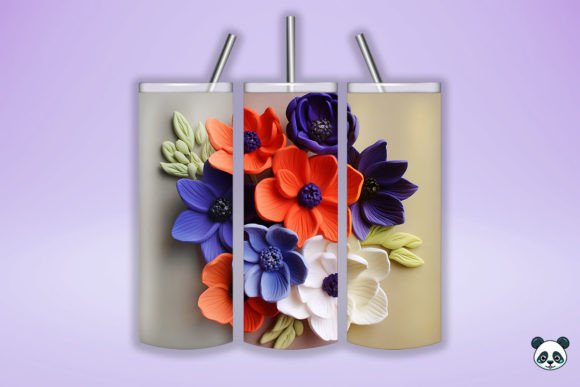
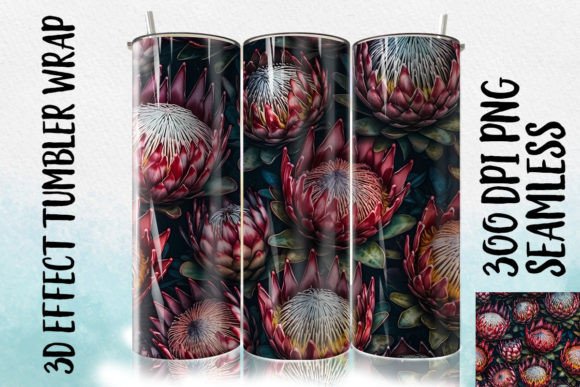
The vibrant, intricate beauty of South Africa’s national flower has found a new canvas in the world of drinkware customization. A 3D Protea Tumbler Wrap offers creators a way to bring botanical elegance to cylindrical surfaces without the distortion that often plagues flat floral designs. Unlike standard two-dimensional patterns, these wraps are engineered specifically for the curvature of tumblers, creating an optical illusion of depth and dimension that makes the protea petals appear to lift off the surface. For anyone involved in sublimation printing, understanding the specific utility and application of this digital asset is essential for achieving professional results.
Understanding the Digital Asset Specifications
Before diving into creative applications, it is vital to understand exactly what this product entails. This is strictly a digital download; no physical tumbler or printed paper will be shipped. Upon purchase, you receive an instant ZIP file containing 37 individual PNG files. Each file is sized at 9.06 inches by 8.11 inches with a resolution of 300 DPI. These specifications are not arbitrary. The 300 DPI ensures that when the ink transfers to the polymer coating of a tumbler, the edges of the protea petals remain crisp rather than pixelated. The 9.06 x 8.11 dimensions are tailored to fit standard 20oz skinny tumblers, though they can be resized for other vessels with proper aspect ratio management.
Because this is a 3D Protea Tumbler Wrap designed for sublimation, users must have access to a sublimation printer, sublimation ink, transfer paper, and a heat press or convection oven. The "3D" designation refers to the visual style of the artwork, which uses shading, highlighting, and perspective tricks to simulate texture. It does not imply embossing or tactile raised printing. Recognizing this distinction prevents disappointment and ensures you have the correct equipment before purchasing.
Perspectives for Small Business Owners and Entrepreneurs
For those running an Etsy shop, a local craft business, or a promotional merchandise company, the primary value of this wrap lies in inventory diversification and production efficiency. Creating original 3D-rendered botanical art requires advanced software skills and significant rendering time. By utilizing a pre-made 3D Protea Tumbler Wrap, entrepreneurs can bypass the design phase entirely and move straight to production. With 37 unique variations included in the bundle, a business owner can create a cohesive collection rather than a single standalone item. Collections tend to perform better commercially because they encourage customers to browse multiple listings.
From a cost perspective, the return on investment is immediate. If a single custom-designed tumbler sells for $25 to $35, the cost of the digital asset is recouped after just one sale. Furthermore, having a library of 37 designs allows for rapid A/B testing. A business can list several variations to see which colorways or compositions resonate most with their specific demographic, using sales data to inform future inventory decisions without risking capital on physical stock.
Creative Exploration for Hobbyists and Beginners
Beginners often struggle with the transition from flat crafting to curved sublimation. The 3D Protea Tumbler Wrap serves as an excellent educational tool for learning alignment and heat application. Because the design features organic, flowing lines rather than rigid geometric grids, minor alignment imperfections are far less noticeable than they would be with checkered or striped patterns. This forgiveness makes it ideal for those still mastering the technique of wrapping transfer paper evenly around a cylinder.
For hobbyists who create gifts for friends and family, the aesthetic appeal of the protea adds a layer of sophistication that generic clipart cannot match. The 3D effect elevates the perceived value of the handmade item. Beginners can also use these files to practice color correction and mirroring in their RIP software or design program. Since the files are high-resolution PNGs with transparent or solid backgrounds suitable for sublimation, they provide a reliable baseline for testing different heat press temperatures and dwell times without worrying if a poor result is caused by low-quality source art.
Professional Applications for Educators and Marketers
Educators in vocational arts, design technology, or adult education programs may find this asset useful for demonstrating digital-to-physical workflows. The 3D Protea Tumbler Wrap illustrates how digital shading translates to physical media. Instructors can use the files to teach students about color profiles, as the vibrant greens and pinks of the protea are excellent indicators of whether a printer’s ICC profile is calibrated correctly. If the colors print muddy or dull, it signals a need for system adjustment before moving on to more complex student projects.
Marketers and event planners might utilize these wraps for branded merchandise that avoids looking overly corporate. The organic nature of the protea allows for subtle branding integration. A logo can be placed within the negative space of the floral arrangement, maintaining the artistic integrity of the 3D effect while still serving a promotional purpose. This approach works particularly well for eco-conscious brands, botanical gardens, florists, or wellness retreats where the imagery aligns naturally with the brand identity.
Evaluating Suitability for Your Specific Goals
Determining whether this specific digital asset matches your needs requires honest self-assessment regarding your equipment and skill level. If you possess a standard inkjet printer and regular paper, this product will not work for you. Sublimation requires specialized polyester-compatible surfaces and dye-sublimation inks. Additionally, while the files are pre-sized, you should verify the exact circumference and height of your specific tumbler blanks. Manufacturing tolerances vary, and a 9.06-inch width may require slight trimming or stretching depending on the blank manufacturer.
Consider your end goal. If you are looking for editable vector files to change individual petal colors or reshape elements, PNG raster files may be limiting. However, if your goal is ready-to-print efficiency and consistent visual quality, the raster format is advantageous. The 300 DPI resolution provides enough data for high-quality printing at the specified size, but significant enlargement beyond 9.06 x 8.11 inches may result in quality loss. Users intending to apply these designs to larger vessels like 30oz tumblers or water bottles should test print a section first to ensure the 3D effect holds up at larger scales.
Practical Considerations for Instant Digital Downloads
The immediacy of digital downloads changes the workflow for creators accustomed to physical supplies. There is no shipping delay, which is beneficial for last-minute orders or sudden bursts of inspiration. However, it also places the responsibility of file management entirely on the user. Upon downloading the ZIP file, it is best practice to extract and organize the 37 PNGs into clearly labeled folders immediately. Losing access to the original download link can be frustrating, so maintaining a local backup on an external drive or cloud storage is recommended.
Users should also be aware of licensing terms associated with digital art. While this asset is purchased for creation, verifying whether the license permits commercial use of the finished physical products versus reselling the digital files themselves is crucial. Most sublimation assets allow for the sale of physical end-products but prohibit sharing or reselling the digital PNGs. Respecting these boundaries protects the creator ecosystem and ensures continued access to high-quality resources. Ultimately, the 3D Protea Tumbler Wrap represents a convergence of natural aesthetics and modern manufacturing technology, offering distinct advantages across various skill levels and business models when used with the appropriate technical knowledge.