Evaluating the 3D Christmas Quilt Money Card Bundle for Holiday Gifting
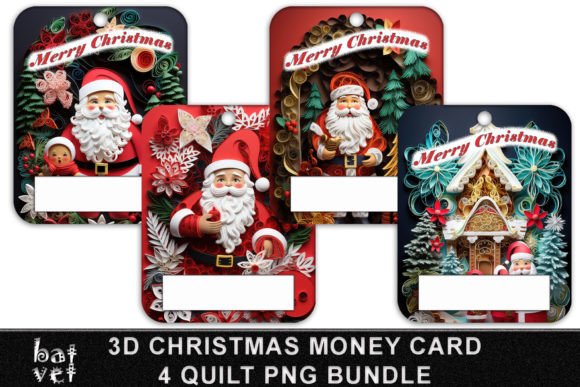
The intersection of traditional paper crafting and modern digital fabrication has produced niche products like the 3D Christmas Quilt Money Card Bundle. This digital asset collection is designed specifically for creators who utilize cutting machines and sublimation printers to produce tactile, interactive greeting cards. Unlike standard flat greeting cards, this bundle focuses on creating a three-dimensional, inflated quilt effect that serves as both a decorative element and a functional money holder. For individuals researching holiday crafting supplies, understanding the technical specifications, practical applications, and limitations of this specific bundle is essential for determining its value within a broader creative workflow.
Defining the Product Scope and Contents
The 3D Christmas Quilt Money Card Bundle is not a physical product but a comprehensive digital download compressed into a ZIP file. It targets users of electronic cutting systems such as Cricut, Silhouette, and Brother ScanNCut, as well as those utilizing sublimation printing technology. The core appeal lies in its versatility; it provides multiple file formats including SVG, EPS, DXF, AI, PNG, and PDF. This multi-format approach ensures compatibility across various software ecosystems, from Adobe Illustrator to proprietary cutting machine software.
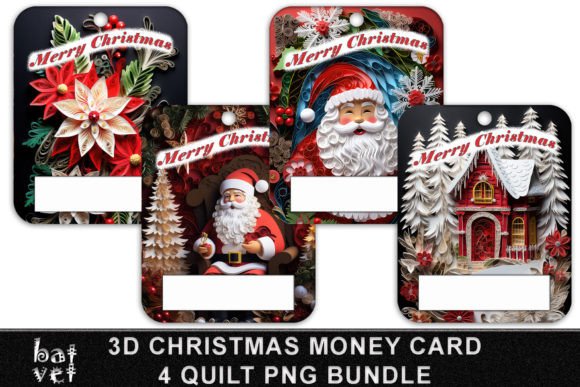
The bundle specifically includes four distinct designs: Santa, Christmas Tree, Christmas Star, and Xmas Eve. Each design is engineered to function as a papercut money holder, integrating a pocket or slot mechanism within the 3D structure. Additionally, the package contains 12 PNG files designated for printing. These are typically high-resolution images intended for sublimation or direct cardstock printing to add color and pattern to the cut layers. The inclusion of both vector cut files and raster print files suggests a hybrid construction method where the structural integrity comes from cut cardstock while the visual detail is achieved through printed overlays.
Functional Benefits and Creative Applications
For crafters evaluating this bundle, the primary benefit is the reduction of design time. Creating a functional 3D pop-up mechanism that also securely holds currency requires precise engineering. The "inflated quilt" aesthetic relies on specific scoring and layering techniques to create volume without excessive bulk. By acquiring a pre-designed bundle, users bypass the prototyping phase, moving directly to production. This is particularly valuable during the high-volume holiday season when time efficiency is critical.
The four included themes cover the most ubiquitous Christmas iconography. The Santa and Christmas Tree designs generally appeal to general audiences and children, while the Christmas Star and Xmas Eve motifs may suit more traditional or religious gifting contexts. The money holder functionality addresses a common gifting dilemma: how to present cash or gift cards in a manner that feels personal and thoughtful rather than transactional. The 3D aspect transforms a monetary gift into a keepsake object, increasing the perceived value of the presentation.
Furthermore, the sublimation component expands the material possibilities. Users are not limited to colored cardstock; they can apply custom patterns, gradients, or photorealistic textures to white cardstock before cutting. This allows for a level of customization that standard vinyl or layered paper cards cannot achieve. The 12 printable PNGs provide enough variety to mix and match patterns across the four base designs, preventing repetitive output if producing cards in batches.
Technical Considerations and Tradeoffs
Despite the advantages, potential users must weigh specific tradeoffs. The complexity of a 3D inflated quilt design demands precision. Cutting machines must be calibrated correctly; blade depth and pressure settings that work for simple vinyl decals may fail here. If the score lines are too deep, the paper tears; if too shallow, the 3D structure will not fold correctly. Users without experience in tuning their machines for intricate cardstock projects may face a steep learning curve and material waste.
Material selection is another critical variable. Sublimation requires polyester-coated surfaces or specialized sublimation cardstock. Standard cotton-based cardstock will not accept sublimation ink permanently. Therefore, owning this bundle necessitates access to specific consumables. Additionally, the assembly of 3D money cards often requires adhesives that bond quickly without warping the paper. Hot glue can be too bulky for delicate quilt layers, while liquid glues may cause rippling. Crafters must have appropriate adhesives, such as double-sided tape runners or precision glue pens, to achieve a professional finish.
There is also the consideration of design rigidity. While the bundle offers four themes, the underlying mechanical structure is likely fixed. Users looking to significantly alter the dimensions or the money-holding mechanism may find editing the SVG files challenging. Complex 3D designs often have interdependent layers; resizing one element can misalign the entire assembly. Those requiring fully parametric or customizable templates might find this static bundle limiting compared to adjustable design software.
Situational Fit and Decision Making
This bundle represents a strong fit for specific user profiles. Small business owners selling seasonal greeting cards on platforms like Etsy will find the commercial-ready designs and batch-production capability advantageous. The combination of sublimation and cutting creates a premium product tier that justifies higher price points than standard printed cards. Similarly, advanced hobbyists who already own sublimation equipment and cutting machines will appreciate the immediate expansion of their holiday catalog without additional design labor.
Conversely, alternatives may be worth considering for different scenarios. Beginners who do not yet own a sublimation printer should look for "layered cardstock only" versions of similar designs. Attempting to use sublimation-focused PNGs with standard inkjet printing often results in poor color vibrancy and smudging, leading to frustration. For those who need to send cards via standard mail, the 3D inflated quilt structure may exceed thickness limits or require extra postage. Flat pop-up cards or traditional pocket cards are more practical for mass mailing.
Additionally, users seeking unique, non-traditional aesthetics might find the Santa, Tree, Star, and Xmas Eve selection too conventional. Niche markets focusing on modern minimalist, vintage, or humorous holiday themes would be better served by searching for specialized designers rather than adapting these classic motifs. The decision to purchase should ultimately hinge on an honest assessment of current equipment capabilities, material inventory, and target audience preferences.
Practical Implementation Insights
For those proceeding with the 3D Christmas Quilt Money Card Bundle, successful implementation begins with file organization. Upon unzipping, users should sort files by type and design immediately. Testing is mandatory; always perform a test cut on scrap paper of the exact weight intended for the final project. Verify that the registration marks for the sublimation prints align perfectly with the cut lines. Misalignment in a 3D project is far more noticeable than in flat projects because it disrupts the illusion of depth.
When assembling the money holder mechanism, prioritize function over form during the initial build. Ensure the pocket opens smoothly and that bills can be inserted and removed without catching on internal layers. Only after confirming the mechanics should the decorative quilt layers be applied. Finally, consider the end-user experience. Including a small instruction note or ensuring the money slot is intuitive prevents the recipient from damaging the card while trying to retrieve the gift. By approaching this bundle with technical diligence and realistic expectations, crafters can effectively leverage these digital assets to create high-quality, functional holiday stationery.