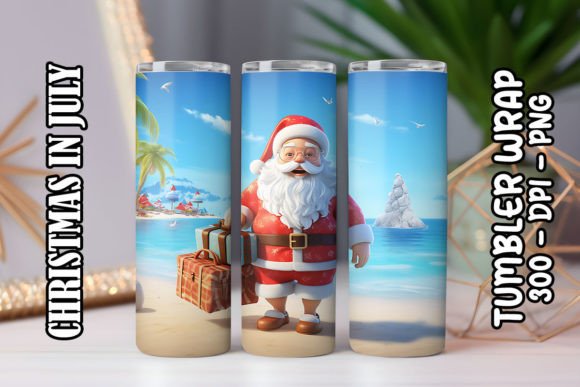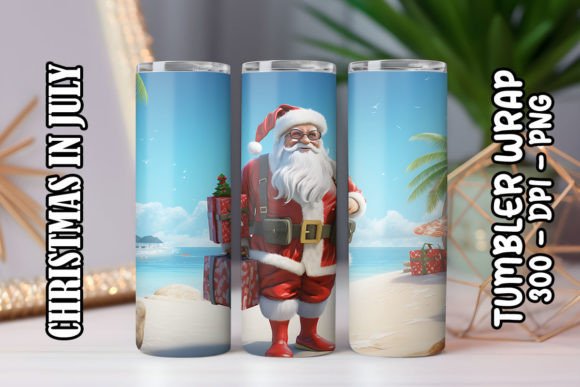
3D Santa Claus Tumbler 10: A Practical Guide to Sublimation Success
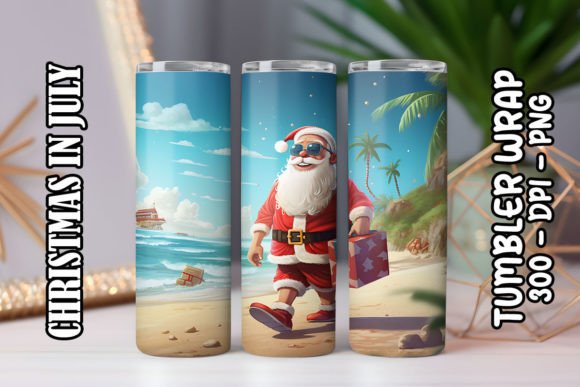
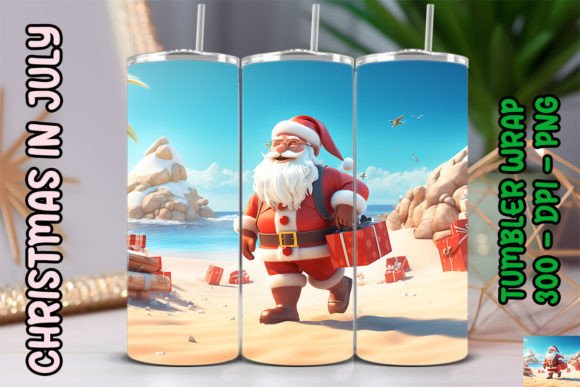
The holiday crafting season moves quickly, and having reliable, high-quality assets is essential for meeting production deadlines. The 3D Santa Claus Tumbler 10 design has gained popularity among sublimation creators because it offers a festive, dimensional aesthetic that stands out on curved drinkware. Unlike flat, two-dimensional clip art, this specific wrap utilizes shading and perspective to create an optical illusion of depth when applied to a cylindrical surface. For small business owners and hobbyists alike, this visual pop can be the difference between a generic holiday mug and a premium product that customers are eager to purchase or gift.
However, acquiring the 3D Santa Claus Tumbler 10 Tumbler Wrap PNG File is only the first step. Many crafters encounter frustration not because the design is flawed, but because they misunderstand the technical requirements of digital sublimation files. Before you add this item to your cart or send it to your printer, it is vital to understand exactly what you are receiving and how to handle it correctly to avoid wasted blanks and ink.
Understanding the Digital Deliverable
A common point of confusion for beginners is the expectation of a physical product. It is crucial to emphasize that this listing is for an instant digital download only. No physical tumbler, printed paper, or transfer sheet will be mailed to you. Upon purchase, you will receive a single ZIP file containing a bundle of PNG files. This distinction matters because digital goods generally have different return policies than physical items. Ensuring you have the necessary equipment and software before purchasing prevents buyer’s remorse and ensures you can utilize the asset immediately.
The included files are specifically formatted at 9.06 inches by 8.11 inches with a resolution of 300 DPI. These dimensions are not arbitrary; they are calibrated for standard 20oz skinny tumblers. Overlooking these specifications is one of the most frequent errors in sublimation printing. If you attempt to use this file on a different tumbler size without proper adjustment, or if you print at a lower resolution, the 3D effect will distort, and the image may appear pixelated or blurry after heat pressing.
Common Sizing and Alignment Mistakes
Even experienced creators sometimes struggle with wrap alignment. The 9.06" x 8.11" sizing is designed to wrap seamlessly around a specific circumference. A practical mistake occurs when users assume this size is universal for all "20oz" tumblers. Manufacturing tolerances vary between brands; some straight-walled tumblers are slightly wider or narrower than others.
Better Approach: Always measure your specific blank before printing. Use a flexible measuring tape to check the circumference. If your tumbler measures differently than the standard assumption behind the 9.06-inch width, you must adjust the canvas size in your design software. Stretching the PNG disproportionately will ruin the 3D perspective of the Santa Claus illustration. Instead, unlock the aspect ratio carefully or use content-aware scaling tools to maintain the integrity of the artwork while fitting your specific vessel.
Another overlooked detail is seam management. When wrapping a tumbler, the vertical edges of the design must meet perfectly. With a 3D design like this Santa wrap, a misaligned seam breaks the illusion of depth instantly. Before committing to a full press, perform a dry fit using thermal tape to ensure the pattern matches at the join line. This extra minute of preparation saves the cost of a ruined tumbler.
Resolution and Color Management Pitfalls
The file is provided at 300 DPI, which is the industry standard for high-quality sublimation. However, simply having a 300 DPI file does not guarantee a crisp print if your printer settings are incorrect. A frequent error is allowing printer drivers to automatically scale or enhance the image. This often results in oversaturation or unintended sharpening that creates artifacts in the gradient areas essential for the 3D effect.
To maintain the quality of the 3D Santa Claus Tumbler 10, configure your printer driver to "Actual Size" or "100% Scale." Disable any automatic color correction features within the driver itself, relying instead on your ICC profile for color accuracy. Sublimation ink looks dull on paper but vibrates once heated; trusting the screen preview or uncalibrated printer defaults often leads to muddy reds or washed-out whites in Santa’s suit and beard.
Software Compatibility and File Handling
You will need to know how to use PNG files for sublimation printing effectively. While PNGs support transparency and high resolution, they are raster images. This means they do not scale up infinitely like vector graphics. If you need to resize the 3D Santa Claus Tumbler 10 Tumbler Wrap PNG File significantly larger than 9.06" x 8.11", you risk quality loss. Conversely, scaling down is generally safe but requires checking that fine details remain visible.
Ensure your design software supports CMYK color workflows or has reliable RGB-to-CMYK conversion capabilities. Sublimation printers use CMYK inks, but many PNGs are created in RGB. Without proper color management, the vibrant holiday reds in this Santa design may shift toward orange or brown during the conversion process. Professional creators always soft-proof their designs using their specific printer/paper ICC profile before printing to catch these shifts early.
Maximizing Value Through Proper Application
This digital bundle includes several PNG variations, offering flexibility for different projects. A missed opportunity occurs when users only utilize the primary wrap and ignore secondary elements that might be included for coordinating designs. Using the full bundle allows for product line cohesion, such as matching coasters or smaller tumblers, which increases perceived value for customers.
When applying this specific 3D design, consider the shrink wrap method versus traditional heat press methods. Because 3D wraps rely heavily on precise positioning to maintain their optical illusion, shrink wrap sublimation can sometimes offer more consistent pressure distribution around the curve compared to a flat press. However, if using a tumbler press, ensure even rotation and pressure. Uneven pressure causes ghosting, which is particularly detrimental to detailed 3D artwork where shadows define the form.
Final Checks Before Purchasing and Printing
To ensure satisfaction with the 3D Santa Claus Tumbler 10, verify your workflow against this checklist:
- Equipment Check: Confirm you have a sublimation printer, sublimation ink, and appropriate heat application equipment.
- Software Proficiency: Ensure you can open ZIP files and manipulate PNG layers in programs like Photoshop, GIMP, Canva, or Silhouette Studio.
- Measurement Verification: Measure your tumbler blanks to confirm compatibility with the 9.06" x 8.11" dimensions.
- Color Profile: Have the correct ICC profile installed for your specific printer and paper combination.
- Test Print: Always print a test on regular paper to check sizing and alignment before using expensive sublimation paper.
By approaching this digital asset with technical awareness rather than assumption, you transform a simple PNG file into a professional-grade product. The 3D Santa Claus Tumbler 10 is designed to deliver stunning results, but those results depend entirely on the crafter's attention to detail regarding sizing, color management, and application technique. Taking these corrective steps ensures your holiday creations are as polished and durable as they are festive.