Evaluating the 3D Santa Claus Tumbler 1 Digital Asset for Sublimation
In the competitive landscape of seasonal merchandise, the efficiency and visual impact of your design assets directly influence production speed and sales potential. The 3D Santa Claus Tumbler 1 represents a specific category of digital sublimation resources designed to bridge the gap between flat graphic design and three-dimensional product presentation. For professionals managing print-on-demand businesses, Etsy shops, or custom gift services, understanding the technical specifications and practical application of this PNG wrap file is essential before integrating it into a holiday production workflow. This asset is not merely a decorative image; it is a functional manufacturing component intended for 20oz skinny tumblers, and its value lies in its precision, resolution, and ease of implementation.
Technical Specifications and File Integrity
When evaluating any digital sublimation asset, technical adherence to printing standards is the primary metric of quality. The 3D Santa Claus Tumbler 1 Tumbler Wrap PNG File is engineered with specific parameters that cater to professional dye-sublimation processes. The included files are sized at exactly 9.06 inches by 8.11 inches. This dimension is critical as it corresponds to the standard circumference and height of a 20oz skinny straight tumbler. Using correctly pre-sized artwork eliminates the need for manual scaling, which can introduce pixelation or distortion if the original canvas resolution is insufficient.
The resolution is set at 300 DPI (dots per inch), which is the industry benchmark for high-fidelity textile and hard substrate printing. At this density, the gradients in the 3D rendering remain smooth without banding, and fine details in the Santa Claus illustration retain their sharpness after the heat transfer process. Lower resolution files often result in muddy prints where shadows and highlights blend indistinctly, but the 300 DPI specification ensures that the simulated depth and lighting effects inherent in the "3D" style translate accurately onto the physical curved surface.
Delivery is structured as an instant digital download containing a single ZIP file. This bundle approach is practical for inventory management, allowing creators to secure multiple variations or related assets in one transaction. However, users must note that this is strictly a digital product. No physical tumbler or printed material is shipped. This distinction is vital for procurement planning; the asset is ready for immediate deployment in software like Photoshop, GIMP, or Canva, facilitating rapid turnaround times during the peak Q4 season.
Visual Design and Market Applicability
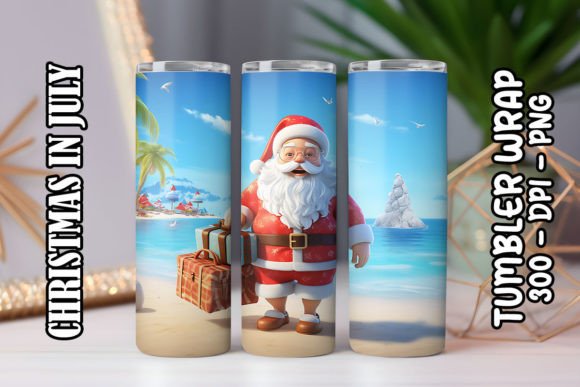
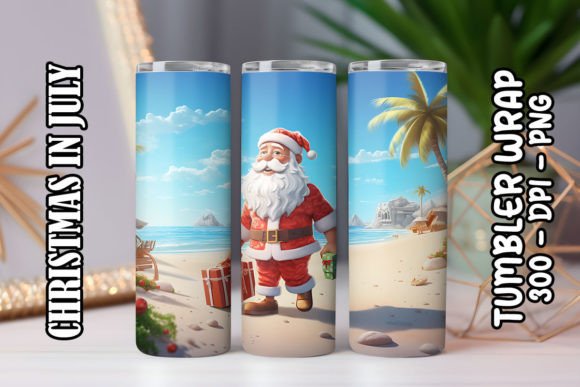
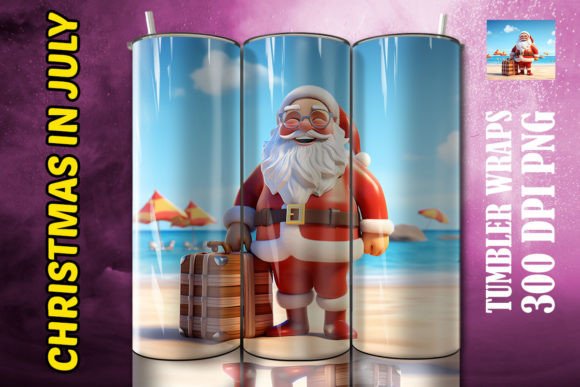
The aesthetic strategy behind the 3D Santa Claus Tumbler 1 focuses on simulated dimensionality. Unlike traditional vector art or flat illustrations, this design utilizes shading, highlighting, and perspective tricks to create the illusion of depth when wrapped around a cylindrical object. In real-world retail environments, particularly on mobile screens where most social media commerce occurs, designs with perceived texture and volume tend to arrest attention more effectively than flat graphics. The 3D styling mimics the look of embossed or sculpted surfaces, adding perceived value to the finished product without requiring expensive manufacturing techniques like UV DTF or epoxy layering.
From a market positioning perspective, this asset targets the classic holiday demographic while maintaining enough stylistic polish to appeal to modern buyers. It avoids overly cartoonish aesthetics in favor of a cleaner, more rendered look that suits adult consumers purchasing gifts for colleagues, teachers, or family members. For sellers, this versatility means the design can be marketed across multiple niches—from "cozy winter vibes" to "traditional Christmas decor"—without appearing out of place. The consistency of the 3D render also allows for cohesive branding; if you are building a collection of holiday tumblers, using assets with similar lighting engines and artistic styles creates a professional storefront appearance that encourages bundled purchases.
Workflow Integration and Practical Usability
For freelancers and small business owners, time is a finite resource. The usability of the 3D Santa Claus Tumbler 1 is defined by how seamlessly it integrates into existing sublimation workflows. Because the file arrives as a transparent or background-optimized PNG at the correct aspect ratio, it functions as a true "wrap." This means the left and right edges are designed to align perfectly when the image wraps around the tumbler. Misaligned seams are a common failure point in tumbler production, resulting in wasted blanks and ink. A properly constructed wrap file mitigates this risk by ensuring pattern continuity at the seam line.
Professionals should verify their printer settings against the file dimensions before mass production. While 9.06 x 8.11 inches is standard, slight variances in tumbler manufacturing or paper shrinkage can occur. It is recommended to print a test sheet on regular paper and wrap it around your specific blank to confirm fitment before committing to sublimation paper and ink. This step validates the digital asset's compatibility with your physical hardware. Additionally, because the design relies on 3D shading, color profile management is important. Ensure your ICC profiles are calibrated for your specific ink and paper combination to preserve the shadow details that give the design its dimensional effect. Over-saturation can flatten these shadows, negating the primary benefit of choosing a 3D-style asset.
Audience Fit and Strategic Considerations
This digital asset is best suited for intermediate to advanced sublimation practitioners who understand file management and color theory. Beginners may find the requirement to handle ZIP files and manage 300 DPI large-format PNGs challenging without prior experience. However, for established creators, marketers, and educators teaching sublimation techniques, this file serves as both a commercial product and a teaching tool for demonstrating how 2D images interact with 3D surfaces.
Entrepreneurs focusing on high-volume seasonal sales will appreciate the instant availability. There is no licensing delay or shipping wait, allowing for reactive marketing; if a trend emerges or a client requests a last-minute Santa design, this asset enables same-day fulfillment. Conversely, those seeking exclusive, trademark-free original art should exercise due diligence. As with many digital marketplace assets, verify the license terms regarding commercial use and resale. While the file is excellent for producing end products, it may have restrictions on redistribution or modification claims.
It is also important to recognize the limitations. The 3D Santa Claus Tumbler 1 is optimized specifically for straight skinny tumblers. Attempting to apply this wrap to tapered cups, mugs, or different size vessels will result in significant distortion and unusable output. Furthermore, while the 3D effect is visually striking in digital mockups, the final physical result depends heavily on the quality of the tumbler coating and the evenness of heat application. Uneven pressure during pressing can disrupt the optical illusion of depth, making the design appear warped rather than sculpted.
Long-Term Value and Production Reliability
In assessing the return on investment, consider the longevity of the design style. Classic Santa imagery has a perennial shelf life, unlike trendy memes or fleeting pop culture references. Investing in high-quality, technically sound versions of evergreen themes provides compounding returns over multiple holiday seasons. The 300 DPI resolution ensures the file remains usable even as print technology improves; a low-res file purchased today may become obsolete within two years, whereas this specification meets current and near-future standards.
Reliability in digital assets also encompasses file organization. Receiving a bundled ZIP implies a level of curation from the creator. When downloading, immediately organize the files into your asset library with clear naming conventions. Since this is a digital-only purchase, maintaining your own backup is mandatory. Platform access can change, and having local copies of your licensed assets protects your business continuity.
Ultimately, the 3D Santa Claus Tumbler 1 is a specialized tool for a specific manufacturing niche. Its worth is determined not just by its visual appeal, but by its technical compliance with sublimation standards and its ability to streamline production. For professionals who prioritize precision and efficiency, it offers a reliable solution for creating high-perceived-value holiday merchandise. By understanding the exact dimensions, resolution requirements, and application methods detailed above, users can leverage this digital asset to enhance their product offerings while minimizing technical friction and waste. Always approach digital downloads with a verification mindset: check the specs, test the print, and validate the license to ensure the asset supports your business goals effectively and legally.