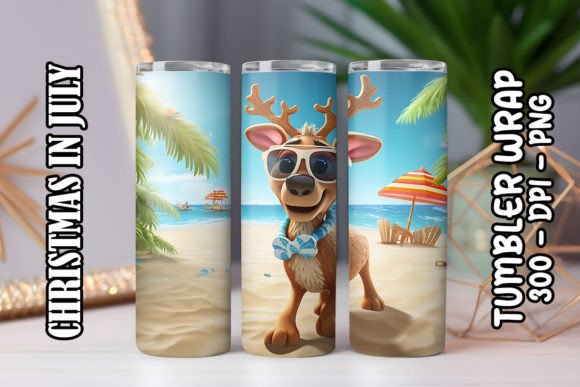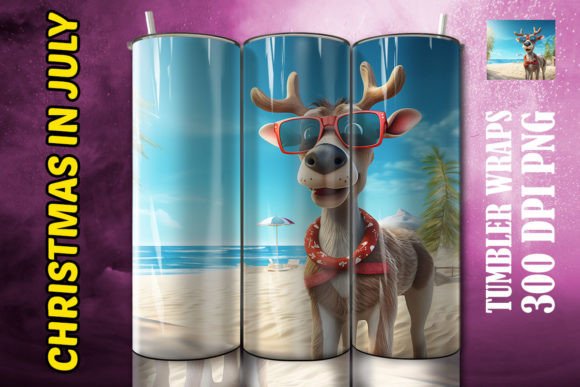
Mastering the 3D Nosed Reindeer Tumbler: A Technical Guide to Digital Sublimation Assets
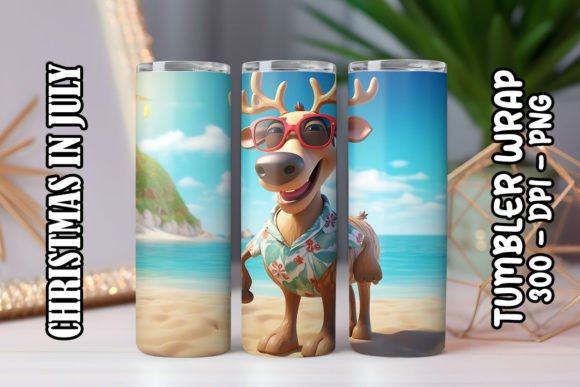
The intersection of holiday tradition and modern manufacturing technology has created a unique niche in the personalized gift market. Among the most sought-after seasonal designs is the 3D Nosed Reindeer Tumbler, a digital asset that bridges the gap between nostalgic aesthetics and contemporary sublimation printing. For creators, small business owners, and hobbyists, understanding the technical specifications and practical applications of this design is essential for producing high-quality drinkware. This guide explores the nuances of utilizing the 3D Nosed Reindeer Tumbler Tumbler Wrap PNG File, focusing on resolution standards, sizing precision, and the workflow required to transform a digital download into a tangible product.
Technical Specifications of the Digital Asset
Success in sublimation printing relies heavily on the quality of the source file. When acquiring a 3D Nosed Reindeer Tumbler Tumbler Wrap PNG File, professionals must verify specific technical parameters to ensure print fidelity. The standard specification for this asset includes a bundle of PNG files sized at 9.06 inches by 8.11 inches with a resolution of 300 DPI. These metrics are not arbitrary; they represent the optimal balance between file manageability and print clarity for standard 20oz skinny tumblers.
The 300 DPI (dots per inch) standard is critical for maintaining the integrity of the 3D effect. Lower resolution files may appear pixelated when wrapped around a curved surface, destroying the illusion of depth that defines the "nosed reindeer" aesthetic. Furthermore, the PNG format is specifically chosen for its lossless compression and support for transparency layers, which allows for seamless blending if the user intends to overlay the reindeer design onto a textured background or gradient. Understanding these specifications helps users avoid common pitfalls associated with low-quality digital downloads.
Understanding Sizing and Aspect Ratio
The dimensions of 9.06 x 8.11 inches correspond to the circumference and height of many popular tumbler blanks. However, practitioners must recognize that tumbler manufacturing tolerances vary. While the digital file provides a precise baseline, real-world application often requires minor adjustments. The width of 9.06 inches typically accommodates the full wrap of a 20oz slim tumbler, while the 8.11-inch height covers the straight wall section. Users should always measure their specific blank before printing, as even a millimeter of variance can result in visible seams or misalignment of the 3D nose element.
Workflow Integration for Sublimation Printing
Acquiring the 3D Nosed Reindeer Tumbler digital file is merely the first step in a multi-stage production process. Because this item is strictly a digital download and does not include physical products, the end-user assumes responsibility for the translation from screen to substrate. A disciplined workflow ensures that the vibrant colors and dimensional shading of the reindeer design transfer accurately to the polymer-coated surface.
- File Verification: Immediately upon receiving the instant digital download ZIP file, extract and inspect all PNGs. Confirm the canvas size matches the stated 9.06 x 8.11 inches and check color profiles (CMYK vs. RGB) to match your printer’s capabilities.
- Mirroring the Image: Sublimation requires the image to be printed in reverse. Most RIP software or design programs have a "mirror" or "flip horizontal" function. Failing to mirror the 3D Nosed Reindeer Tumbler Tumbler Wrap PNG File will result in a backwards design where the 3D lighting effects are inverted, ruining the visual depth.
- Color Management: The 3D effect relies on subtle gradients to simulate lighting. Ensure your printer settings are optimized for sublimation paper and ink. Standard document printing profiles often oversaturate reds and greens, which can flatten the 3D appearance of the reindeer’s nose.
- Heat Press Parameters: Adhere to manufacturer recommendations for time, temperature, and pressure. Inconsistent pressure is particularly detrimental to 3D designs, as it can cause ghosting or blurring that negates the sharpness of the digital file.
Software Compatibility and Editing
While the provided PNG files are ready-to-print, advanced users often integrate them into broader compositions. The 300 DPI resolution allows for scaling down without quality loss, though scaling up beyond the native 9.06 x 8.11 dimensions is discouraged. Compatible software includes Adobe Photoshop, GIMP, Affinity Photo, and specialized sublimation design suites. When editing, maintain the original aspect ratio to prevent distortion of the reindeer’s features. If adding personalized text or names, place them in areas that do not interfere with the primary focal point of the 3D nose to preserve the design's impact.
Market Applications and Audience Segmentation
The versatility of the 3D Nosed Reindeer Tumbler extends across multiple user demographics. Its appeal lies in the universal recognition of the subject matter combined with the novelty of the 3D rendering style. Different segments utilize this digital asset for distinct purposes, ranging from commercial revenue generation to educational demonstrations.
Commercial Creators and Small Businesses
For Etsy sellers and local craft vendors, this design serves as a high-margin seasonal product. The instant digital download model eliminates inventory risk associated with pre-printed wraps. Businesses can offer customization options, such as adding recipient names or altering background colors, while using the core 3D Nosed Reindeer Tumbler Tumbler Wrap PNG File as the anchor graphic. The professional 300 DPI quality ensures that the final product meets consumer expectations for retail-grade merchandise.
Educators and Workshop Leaders
Instructors teaching sublimation techniques find this asset particularly valuable for demonstrating intermediate concepts. The 3D shading provides an excellent case study in color theory and heat transfer dynamics. Students can learn how gradients behave under heat and pressure, and how digital lighting effects translate to physical media. The standardized sizing also makes it ideal for group workshops where participants use identical equipment and blanks.
Hobbyists and Personal Gifters
Individual creators making gifts for friends and family benefit from the accessibility of the digital format. Without needing to master complex 3D modeling software, hobbyists can achieve professional-looking results. The included bundle of several PNG files offers variety, allowing makers to produce matching sets or experiment with different layouts without additional cost.
Critical Considerations for Digital Downloads
Purchasing and utilizing digital assets like the 3D Nosed Reindeer Tumbler requires awareness of licensing, technical limitations, and usage rights. Unlike physical goods, digital files come with specific constraints that users must navigate responsibly.
Instant Access and File Management: The convenience of instant digital download means immediate access to the ZIP file. However, this also places the burden of file security on the buyer. It is advisable to store the original high-resolution PNGs in cloud storage or external drives immediately after purchase. Re-downloading may not always be possible if the listing changes or expires.
Sublimation Knowledge Requirement: As explicitly noted in the product details, buyers must possess prior knowledge of sublimation printing. This asset is not a tutorial; it is a component. Beginners should familiarize themselves with their specific heat press and printer setup before attempting to use the 3D Nosed Reindeer Tumbler Tumbler Wrap PNG File. Test prints on scrap material are recommended to dial in settings before committing to expensive tumbler blanks.
No Physical Items Included: Misunderstandings about digital versus physical products remain common. Buyers must understand that no tumbler, printed wrap, or physical reindeer ornament will arrive in the mail. The value proposition is entirely contained within the digital data. This distinction affects shipping expectations, return policies, and project planning timelines.
Optimizing Print Quality for 3D Effects
Achieving the intended visual impact of a 3D nosed reindeer design requires attention to detail during the printing phase. The perception of depth is created through contrast and shadow definition. If the print appears flat, the 3D illusion fails. Several factors influence this outcome:
- Paper Selection: Use high-release sublimation paper designed for rigid substrates. Papers with poor release rates can leave residual ink, causing muddy shadows that obscure the 3D contours of the reindeer’s face.
- Ink Saturation: Monitor ink levels closely. Faded magenta or yellow cartridges disproportionately affect warm-toned 3D renders, making the nose appear dull rather than luminous.
- Tumbler Coating Quality: Not all polymer coatings are equal. Premium AAA-rated blanks provide the smoothest surface for rendering fine details. Inferior coatings may have microscopic imperfections that scatter light, reducing the perceived sharpness of the 3D effect.
- Alignment Precision: The 3D perspective is calibrated for a specific viewing angle. Misaligning the wrap during application shifts this perspective, potentially making the nose look distorted. Using alignment jigs or silicone bands can help maintain proper positioning during the heat transfer process.
By treating the 3D Nosed Reindeer Tumbler as a precision instrument rather than a generic clip art file, users unlock its full potential. The combination of correct technical specifications, disciplined workflow, and appropriate hardware creates a pathway to exceptional seasonal creations. Whether for commercial sale or personal enjoyment, mastery of this digital asset reflects a broader competence in the evolving landscape of digital fabrication and personalized manufacturing.